At the start of your eye exam, your eye doctor reviews your medical history and asks about any problems you’ve been experiencing. You also need to undergo tests, including:
-
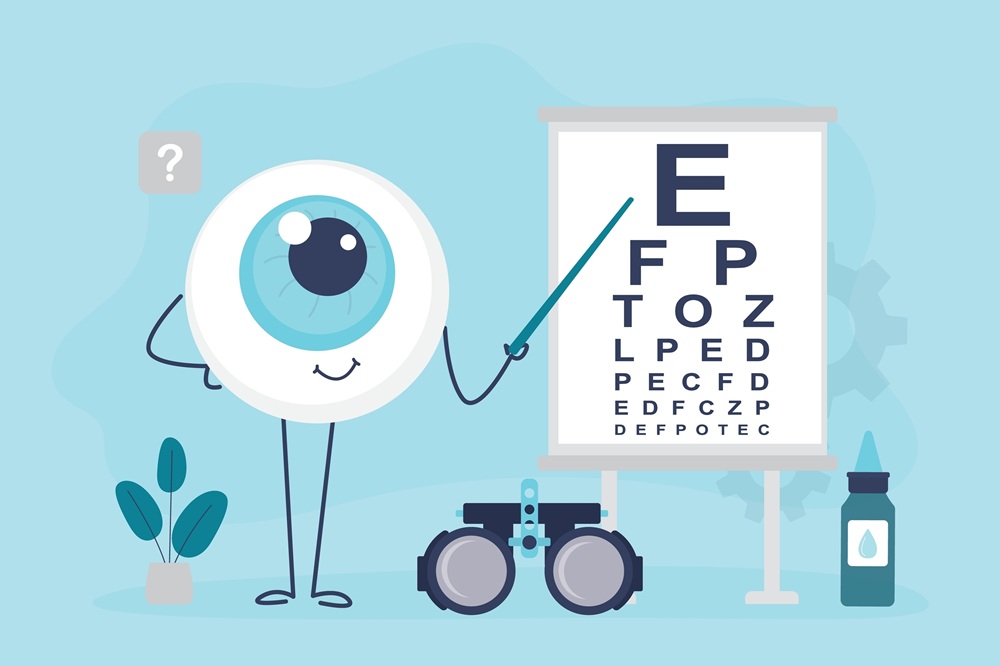
- Visual acuity: Visual acuity tests are where you read letters of different sizes on an eye chart. This determines how well each eye sees at a distance.
-
- Corrective lens prescription: Your eye doctor uses a phoropter device to determine the optimal prescription for your corrective glasses or contact lenses.
-
- Pupil reactivity: Your eye doctor shines a bright light into each eye to see how your pupils respond. They should shrink when the light is on them, then widen again afterward.
-
- Peripheral vision assessment: This test checks how well you can see at the edges of your range of vision (periphery). Poor peripheral vision can be a symptom of glaucoma.
-
- Ocular motility: An ocular motility test checks how well your eyes move. Your eye doctor uses it to ensure your eye alignment is correct and that the muscles controlling your eye movements are functioning properly.
-
- Tonometry: Tonometry measures the pressure inside your eyeball (intraocular pressure or IOP). Raised IOP could be a symptom of glaucoma.
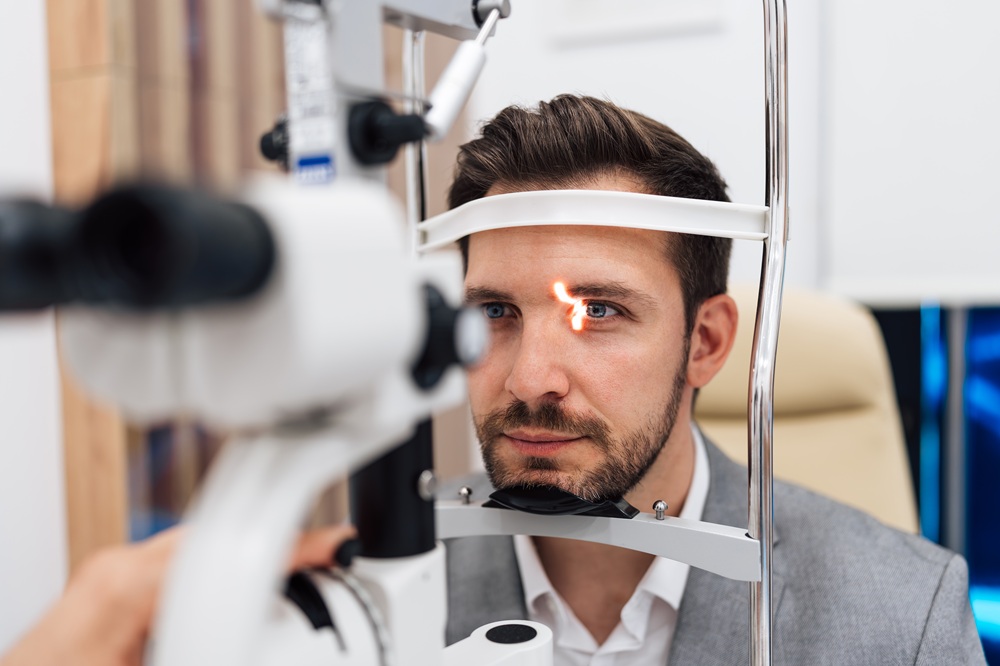
- Structural evaluation: Your eye doctor uses a slit-lamp microscope to examine the front of your eye in detail. They look for problems like cataracts and scars on your cornea and check the inside of your eyelids.
Your provider may also use eye drops to dilate your pupils so they can examine the retinas and optic nerves at the back of your eyes.
Some people benefit from additional procedures, such as optical coherence tomography (OCT) or retinal photography. These noninvasive tests provide a closer view of your retina.